Strain Profile
Red Kumrat
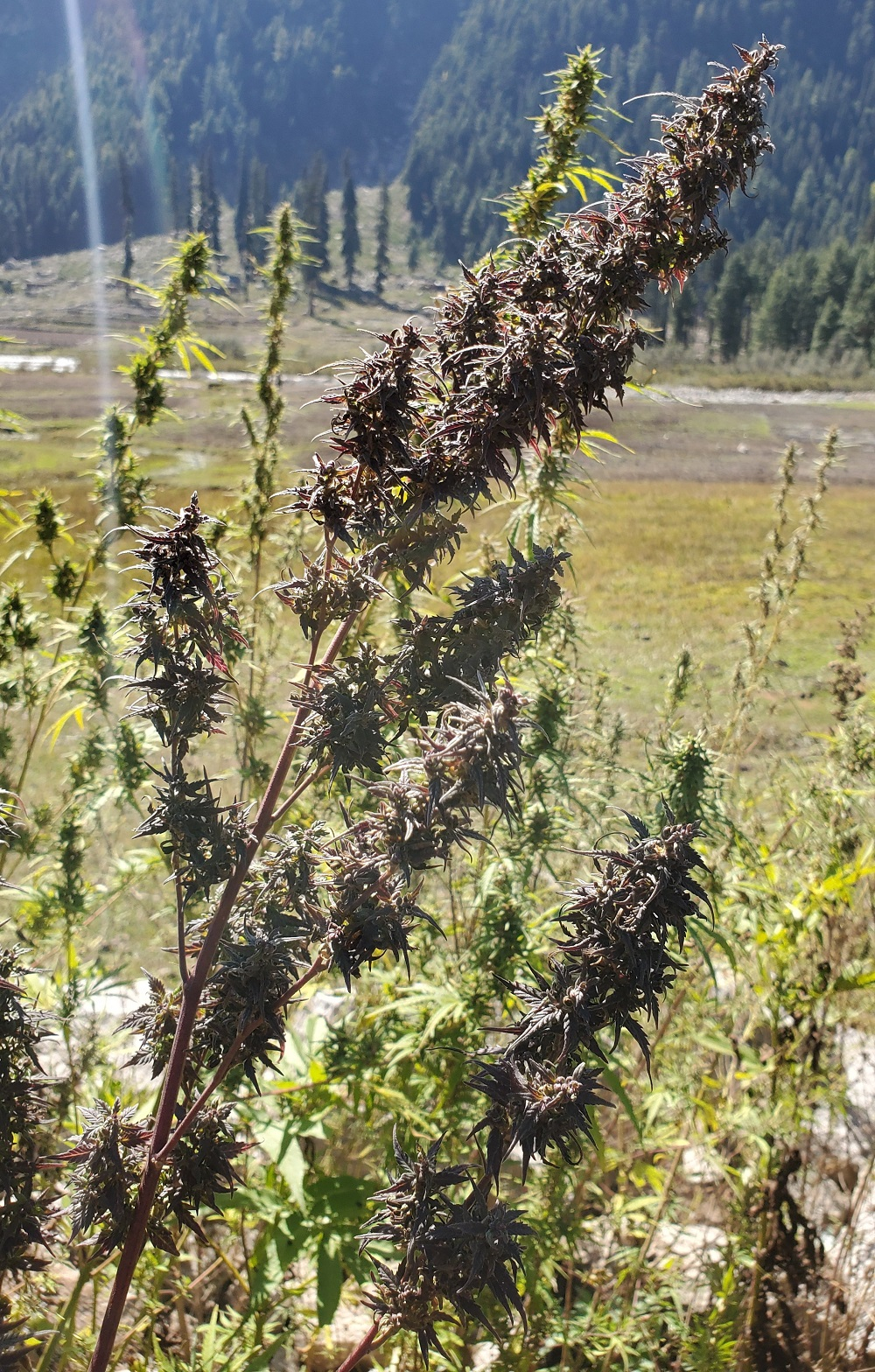
Red Selection from the Kumrat Valley, Khyber Pakhtunkhwa, featured a tall/wispy structure up to 7ft tall with minimal side branching. The flowers were quite airy and lose covered in resin and many bracts already opening up to disperse the seeds. It carried a strong piney stench, along with aromas resembling industrial adhesive. A truly beautiful example of a primordial landrace variety, which hasn’t been systematically cultivated or domesticated, by human beings but only used as a herb procured directly from the wild. Hence, these populations have been surviving completely on their own in this harsh terroir for the longest time by letting the environment take complete control of their evolutionary path. Where, the environmental pressure of the terroir gradually shapes the plant populations overtime to best fit their ecological habitats, imperative for long term survival. Kumrat Valley, is located towards the northernmost fringes of the Khyber Pakhtunkhwa around 35N, with an average floor elevation of 2000 meters. The Valley lies in the lesser known kohistan region which is inhabited by mostly Kohistani tribes. Due to a combination of high latitude position and high altitude the onset of snow comes as early as late October to early November, which brings the valley to a halt until April when the snow clears. Kumrat Valley is located towards the south East of Chitral and hence falls around the eastern foothills of the Hindu Kush mountain range traversing into Afghanistan. Kumrat Valley, doesn’t have any planned cultivation of cannabis at all, and all the cannabis populations in the valley are intact in their primordial form, completely unaffected from any domestication efforts. The local variety grows up to be an extremely thin, wispy up to 5-7 ft tall plants, with disperse bract flower structure. The seeds are ejected from the bracts automatically at different times during the flowering period similar to other wild varieties we have seen in the past. However, the size and the density of the resin glands is exceptional as expected from a cannabis population adapted to an extremely cold (semi-tundra) climate. These primordial landrace populations represents the actual Hindu Kush highland variety which has been taken by farmers, travellers, collectors and so many others to a variety of different habitats from it’s own. To be then domesticated, bred, selected and turned into something more productive to human beings. The overall lack of vigor in the plants, can be seen from a lesser root mass to thin/wispy stems only capable of producing little bud growth.The buds typically feature smaller sized bracts with a short life span, facilitating the self dispersal of the seeds. In the valley, seeds fall on the ground each year to be buried under the snow for at least 4 months before they can sprout up once again in the spring season. The seeds are typically oblong/pear shaped, tiny and dark in color. The seeds have extremely hard shells, that seems to have developed multiple non permeable layers, which stops the moisture from entering the seed for long periods of time thus delaying the germination until the favourable time of the year, i. e. spring. The weather around the harvest window gets extremely cold, with a wild swing in the day and night time temperatures. A lot of plants can be seen expressing vibrant hues of purples and reds. The flowering window is only around 8-9 weeks in the valley, which begins from August and closes in the first week of october as the snow comes in. These plants appear similar to the primordial Landrace populations documented in northern Kashmir (Lolab valley) and even from the southern Kashmir region like Srinagar and Pulwama. Which finishes with an appearance similar to a long flowering variety from lower latitudes, However, the flowering term is significantly shorter (almost half compared to Landraces adapted to temperate regions located at lower latitudes) The buds are much more dense and the resin production is exceedingly better with bigger size of resin glands , especially the capitate-stalked trichomes which are rarely seen on the landrace varieties from hotter (temperate and equatorial) regions. Type: FIRST GENERATION (P1) LANDRACE STRAIN Format:Regular Sativa / Indica ratio: 100 % sativa Flowering indoors: 8-9 weeks Flowering outdoors: Early October Yield: Average-Low Resistance against spider mites: High Resistance against powder mildew: High Resistance against botrytis: High Resistance against white fly: Average-High Resistance against cold: High Resistance against heat: High Latitude: 0º-50º Genetics: Best red selection from wild plants found in Kumrat Valley during 2021 season. First generation pure sativa landrace from Northern Pakistan. Structure: Tall, wispy structure up to 7ft tall with minimal side branching. Bouquet: Strong piney stench, along with aromas resembling industrial adhesive. High: A wilder population with not so strong but very unique, uplifting and mood e
Lineage
Pakistan - Sativa
Availability
Registry Only
Archive record
This accession remains in the registry and archive, but no active purchasable inventory is on file right now.
Similar profile / type in stock
Forensic_Dossier_Active
Red Kumrat
Genome.
Visual_History
View_Master
System_G_Pedigree
Genomic Matrix
Primary IsolateGenesis Node
Primary IsolateGenesis Node
Lineage Navigator
Parent / Current / DescendantParents
PA
Current Node
Direct descendants: 0
Recursive descendants: 0
Direct Descendants
No descendant nodes match this filter.
"Red Selection from the Kumrat Valley, Khyber Pakhtunkhwa, featured a tall/wispy structure up to 7ft tall with minimal side branching. The flowers were quite airy and lose covered in resin and many bracts already opening up to disperse the seeds. It carried a strong piney stench, along with aromas resembling industrial adhesive. A truly beautiful example of a primordial landrace variety, which hasn’t been systematically cultivated or domesticated, by human beings but only used as a herb procured directly from the wild. Hence, these populations have been surviving completely on their own in this harsh terroir for the longest time by letting the environment take complete control of their evolutionary path. Where, the environmental pressure of the terroir gradually shapes the plant populations overtime to best fit their ecological habitats, imperative for long term survival. Kumrat Valley, is located towards the northernmost fringes of the Khyber Pakhtunkhwa around 35N, with an average floor elevation of 2000 meters. The Valley lies in the lesser known kohistan region which is inhabited by mostly Kohistani tribes. Due to a combination of high latitude position and high altitude the onset of snow comes as early as late October to early November, which brings the valley to a halt until April when the snow clears. Kumrat Valley is located towards the south East of Chitral and hence falls around the eastern foothills of the Hindu Kush mountain range traversing into Afghanistan. Kumrat Valley, doesn’t have any planned cultivation of cannabis at all, and all the cannabis populations in the valley are intact in their primordial form, completely unaffected from any domestication efforts. The local variety grows up to be an extremely thin, wispy up to 5-7 ft tall plants, with disperse bract flower structure. The seeds are ejected from the bracts automatically at different times during the flowering period similar to other wild varieties we have seen in the past. However, the size and the density of the resin glands is exceptional as expected from a cannabis population adapted to an extremely cold (semi-tundra) climate. These primordial landrace populations represents the actual Hindu Kush highland variety which has been taken by farmers, travellers, collectors and so many others to a variety of different habitats from it’s own. To be then domesticated, bred, selected and turned into something more productive to human beings. The overall lack of vigor in the plants, can be seen from a lesser root mass to thin/wispy stems only capable of producing little bud growth.The buds typically feature smaller sized bracts with a short life span, facilitating the self dispersal of the seeds. In the valley, seeds fall on the ground each year to be buried under the snow for at least 4 months before they can sprout up once again in the spring season. The seeds are typically oblong/pear shaped, tiny and dark in color. The seeds have extremely hard shells, that seems to have developed multiple non permeable layers, which stops the moisture from entering the seed for long periods of time thus delaying the germination until the favourable time of the year, i. e. spring. The weather around the harvest window gets extremely cold, with a wild swing in the day and night time temperatures. A lot of plants can be seen expressing vibrant hues of purples and reds. The flowering window is only around 8-9 weeks in the valley, which begins from August and closes in the first week of october as the snow comes in. These plants appear similar to the primordial Landrace populations documented in northern Kashmir (Lolab valley) and even from the southern Kashmir region like Srinagar and Pulwama. Which finishes with an appearance similar to a long flowering variety from lower latitudes, However, the flowering term is significantly shorter (almost half compared to Landraces adapted to temperate regions located at lower latitudes) The buds are much more dense and the resin production is exceedingly better with bigger size of resin glands , especially the capitate-stalked trichomes which are rarely seen on the landrace varieties from hotter (temperate and equatorial) regions. Type: FIRST GENERATION (P1) LANDRACE STRAIN Format:Regular Sativa / Indica ratio: 100 % sativa Flowering indoors: 8-9 weeks Flowering outdoors: Early October Yield: Average-Low Resistance against spider mites: High Resistance against powder mildew: High Resistance against botrytis: High Resistance against white fly: Average-High Resistance against cold: High Resistance against heat: High Latitude: 0º-50º Genetics: Best red selection from wild plants found in Kumrat Valley during 2021 season. First generation pure sativa landrace from Northern Pakistan. Structure: Tall, wispy structure up to 7ft tall with minimal side branching. Bouquet: Strong piney stench, along with aromas resembling industrial adhesive. High: A wilder population with not so strong but very unique, uplifting and mood e"
Sovereign_Interconnect
Contribute to Red Kumrat.
Community-powered genetic intelligence. Interact with the global registry and marketplace via the SBI protocol.
Sell Seeds or Clones
List this strain on the marketplace.
Initialize_Protocol
Submit a Cross
Register a new cross using this parent.
Initialize_Protocol
Suggest a Correction
Fix lineage, names, or other data.
Initialize_Protocol
Submit Photos
Add grow photos or bud shots.
Initialize_Protocol
Share Grow Report
Document your experience growing this.
Initialize_Protocol