Strain Profile
Eastern Manipur-Burma
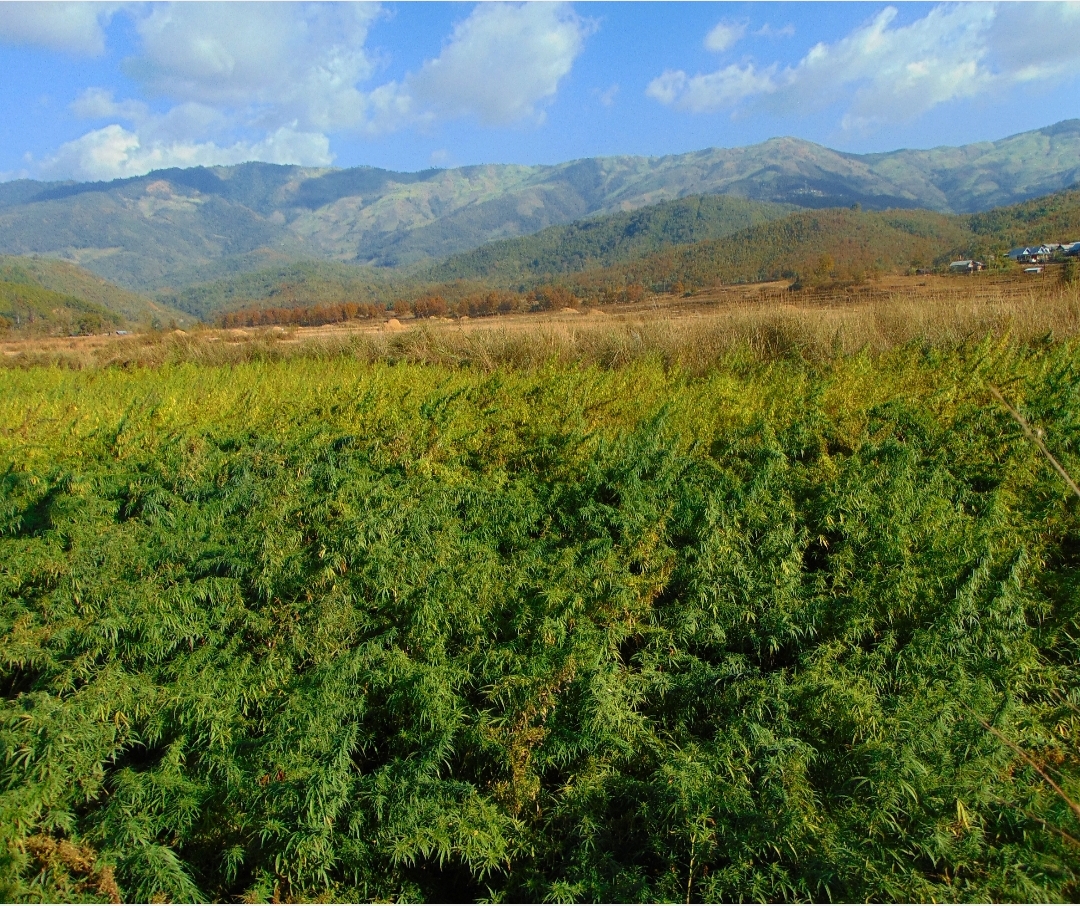
Remote Location Near Manipur-Burma Border. approx. Lat. N° 25.09, E° 94.36 Approximately 1500 meters above the sea level (5000+ ft.) The Eastern Manipur region which Borders with Burma (Myanmar) has a lush evergreen Hilly terrain. The Hills aren't the same as the ones seen in Himalayan states such as Himachal or Uttrakhand but rather smaller and a mix of Undulating topography , Larger Hills at the periphery and a Huge expanse of plain Valleys of alluvial tracts possibly shaped by flooding of the region in the past. This region is Inhabited by Tangkhul tribe a Sub division in the great Naga or (Mao) tribe. The Mao language is classified as one of the Angami-Pochuri languages which is sub categorized as an independent dialect taking it's origins from the Tibeto-Burman languages, Which along with other evidences paints a gradual migration from Burma (Myanmar) into present Day North-East India. The Battle of Imphal during World war II very rarely if ever credit the imperative role of these Naga tribes who helped allied forces by pushing back the Japanese, which is one of the reasons these tribes afterwards were granted a special status (Article 371 A ) which allows them to bear arms along with several other rights to protect their territory. Tangkhul is one of 3 main tribes in manipur out of Meitei (Hindu) kuki and tangkhul who are mostly converted christians by the missionaries under the british colonial rule. Tangkhul people are the ones doing the mass production around the ukhrul district that borders with burma and a few kuki tribes as well however this region is dominated by tangkhul tribe while kuki tribes are more concentrated towards churachandpur, sikul and metei people living mostly in and around the capital imphal which is also strongly suggest a social and economic status amonst the tribes. Manipur in General has a tropical to Subtropical climate for most of the year except the winter months when the rainfall finally takes a break after an Avg. 2000+ mm precipitation during the Summer and extended monsoons. The climate in manipur is affected tremendously by the taller mountains surrounding from the bordering states like Assam and Nagaland. Even though it doesn't ever get as hot as North or central India but the winter temperatures can still fall below 10°C during Dec-Jan which is quite similar to North Indian states like punjab featuring a temperate climate. The acute levels of Humidity from the heavy rainfall is a Huge factor in shaping the vegetation around Manipur, The hills maintain a lush green colour all year around with only a very few varieties of trees showing Typical Fall colours which are dotted in the middle of a sea of green on the hills. Large Banana plantations can be seen thriving on the hill slopes along with Endless poppy fields and countless other plant species expressing larger leaf surface than normal e.g. Castor. The farmers specifically from this region near the Eastern Manipur-Burma border grow cannabis all around the year thus creating a perpetual harvest like situation. Manipur is located roughly between 24-25°N and undergoes a considerable amount of change in the light hours through summers to winters, however it doesn't snow in the winters and temperatures lurk around 10-15°C which paves the way for a possibility of multiple crops all 12 months. The seeds sown around Spring and early summers get a full season and grow tall around 10-11 ft. Although the seeds sown later in the summer stay around a medium stature of 6-7 ft and finally winter sown crops flowers out really small about 4-5 ft avg. Population height since it goes straight into flowering without any veg. Time at all. The tremendous pressure for evermore production of black market cannabis in an overpopulated country is driving these changes from region to region. However, both the winter and the late season (july -august) crops yield considerably lower compared to the prime crop sown with the season but the farmers are happy to take a small dip in the weight instead of waiting through a mild winters without any harvest. The price of mass processed material when taken off the farms is less than $10/Kilo with absolutely no hope of any hike. It leaves no other option for the farmers but to resort to producing more by planting throughout the year and selling a larger qty. Overall to make things work. The Full season crop, which is sown at the beginning of the summers or in mid to late spring. This particular crop goes through a normal life cycle and only begin to flower around August after at least 3 months of vegetative growth. These crops can get big, upto 10-11 ft tall with heavy lateral branching even without any stress training. Without any interference the plant instead of taking a christmas tree like shape grows considerable side branches that are equally robust as they're plentiful. The full season crop brings in more weight than other two put together which makes it their prime crop and they only harvest th
Lineage
India - Sativa
Availability
Registry Only
Archive record
This accession remains in the registry and archive, but no active purchasable inventory is on file right now.
Request restock alertFollow strainSubmit lineage evidencePost Grow JournalShare PhotosSubmit Experience Report
This strain stays visible as an archive record, but there are no active SBI alternatives linked yet.
Forensic_Dossier_Active
Eastern Manipur-Burma
Genome.
Visual_History
View_Master
System_G_Pedigree
Genomic Matrix
Primary IsolateGenesis Node
Primary IsolateGenesis Node
Lineage Navigator
Parent / Current / DescendantParents
IN
Current Node
Direct descendants: 0
Recursive descendants: 0
Direct Descendants
No descendant nodes match this filter.
"Remote Location Near Manipur-Burma Border. approx. Lat. N° 25.09, E° 94.36 Approximately 1500 meters above the sea level (5000+ ft.) The Eastern Manipur region which Borders with Burma (Myanmar) has a lush evergreen Hilly terrain. The Hills aren't the same as the ones seen in Himalayan states such as Himachal or Uttrakhand but rather smaller and a mix of Undulating topography , Larger Hills at the periphery and a Huge expanse of plain Valleys of alluvial tracts possibly shaped by flooding of the region in the past. This region is Inhabited by Tangkhul tribe a Sub division in the great Naga or (Mao) tribe. The Mao language is classified as one of the Angami-Pochuri languages which is sub categorized as an independent dialect taking it's origins from the Tibeto-Burman languages, Which along with other evidences paints a gradual migration from Burma (Myanmar) into present Day North-East India. The Battle of Imphal during World war II very rarely if ever credit the imperative role of these Naga tribes who helped allied forces by pushing back the Japanese, which is one of the reasons these tribes afterwards were granted a special status (Article 371 A ) which allows them to bear arms along with several other rights to protect their territory. Tangkhul is one of 3 main tribes in manipur out of Meitei (Hindu) kuki and tangkhul who are mostly converted christians by the missionaries under the british colonial rule. Tangkhul people are the ones doing the mass production around the ukhrul district that borders with burma and a few kuki tribes as well however this region is dominated by tangkhul tribe while kuki tribes are more concentrated towards churachandpur, sikul and metei people living mostly in and around the capital imphal which is also strongly suggest a social and economic status amonst the tribes. Manipur in General has a tropical to Subtropical climate for most of the year except the winter months when the rainfall finally takes a break after an Avg. 2000+ mm precipitation during the Summer and extended monsoons. The climate in manipur is affected tremendously by the taller mountains surrounding from the bordering states like Assam and Nagaland. Even though it doesn't ever get as hot as North or central India but the winter temperatures can still fall below 10°C during Dec-Jan which is quite similar to North Indian states like punjab featuring a temperate climate. The acute levels of Humidity from the heavy rainfall is a Huge factor in shaping the vegetation around Manipur, The hills maintain a lush green colour all year around with only a very few varieties of trees showing Typical Fall colours which are dotted in the middle of a sea of green on the hills. Large Banana plantations can be seen thriving on the hill slopes along with Endless poppy fields and countless other plant species expressing larger leaf surface than normal e.g. Castor. The farmers specifically from this region near the Eastern Manipur-Burma border grow cannabis all around the year thus creating a perpetual harvest like situation. Manipur is located roughly between 24-25°N and undergoes a considerable amount of change in the light hours through summers to winters, however it doesn't snow in the winters and temperatures lurk around 10-15°C which paves the way for a possibility of multiple crops all 12 months. The seeds sown around Spring and early summers get a full season and grow tall around 10-11 ft. Although the seeds sown later in the summer stay around a medium stature of 6-7 ft and finally winter sown crops flowers out really small about 4-5 ft avg. Population height since it goes straight into flowering without any veg. Time at all. The tremendous pressure for evermore production of black market cannabis in an overpopulated country is driving these changes from region to region. However, both the winter and the late season (july -august) crops yield considerably lower compared to the prime crop sown with the season but the farmers are happy to take a small dip in the weight instead of waiting through a mild winters without any harvest. The price of mass processed material when taken off the farms is less than $10/Kilo with absolutely no hope of any hike. It leaves no other option for the farmers but to resort to producing more by planting throughout the year and selling a larger qty. Overall to make things work. The Full season crop, which is sown at the beginning of the summers or in mid to late spring. This particular crop goes through a normal life cycle and only begin to flower around August after at least 3 months of vegetative growth. These crops can get big, upto 10-11 ft tall with heavy lateral branching even without any stress training. Without any interference the plant instead of taking a christmas tree like shape grows considerable side branches that are equally robust as they're plentiful. The full season crop brings in more weight than other two put together which makes it their prime crop and they only harvest th"
Sovereign_Interconnect
Contribute to Eastern Manipur-Burma.
Community-powered genetic intelligence. Interact with the global registry and marketplace via the SBI protocol.
Sell Seeds or Clones
List this strain on the marketplace.
Initialize_Protocol
Submit a Cross
Register a new cross using this parent.
Initialize_Protocol
Suggest a Correction
Fix lineage, names, or other data.
Initialize_Protocol
Submit Photos
Add grow photos or bud shots.
Initialize_Protocol
Share Grow Report
Document your experience growing this.
Initialize_Protocol